mobile
Sleep in a natural environment
Home recordings eliminate the 'first night effect' of inpatient settings and increase ecological validity.
Scenario for somnologists, laboratories, and R&D teams: at-home and field sleep recordings without a stationary facility — with analysis of stages, spindles, and slow waves.
Sleep research on modern wireless EEG headsets allows for recording nighttime brain activity at home or in the field—without wires from the ceiling and a special chamber. The same rhythmic phenomena as in the laboratory are recorded: sleep spindles, K-complexes, delta-range slow-wave activity, REM periods based on EEG and eye movements.
The protocol depends on the task. For screening and field studies, 6 channels with saline EPOC X sensors are sufficient: the participant puts on the headset themselves and sleeps in their usual environment, which in itself increases data validity (the 'first night effect' is minimal). For advanced protocols with localization and polygraphy, we use FLEX with gel sensors and parallel EOG and ECG recording. Recordings are exported to EDF/CSV and analyzed in familiar software packages.
We help assemble a kit for your protocol: headset, charging station, overnight monitoring schemes, and processing pipeline—with team training in Russian and support for first recordings.
Key signal indicators on which the methodology is built: from basic EEG rhythms to derived indices.
sigma activity 11–16 Hz — a marker for N2 stages and memory consolidation
slow-wave sleep (N3): depth and restorative function of sleep
rapid eye movements and EEG desynchronization — REM sleep phase
time from lights off to stable sleep patterns
short sleep fragments affecting subjective rest quality
increase in theta activity in wakefulness tests and drowsy episodes
We define tasks (night sleep, drowsiness, deprivation), agree on ethics and participant inclusion criteria.
We select headsets and charging logistics, configure night recording mode, and power backup.
We teach participants to put on the headset themselves and keep a sleep diary — this is critical for home format.
We conduct recordings: an adaptation night, then the main series; data is consolidated into a single archive.
We annotate stages and events, calculate sleep indices, prepare reports for participants and groups.
Configurations that most often solve the use case — with a transition to full specifications and photos.
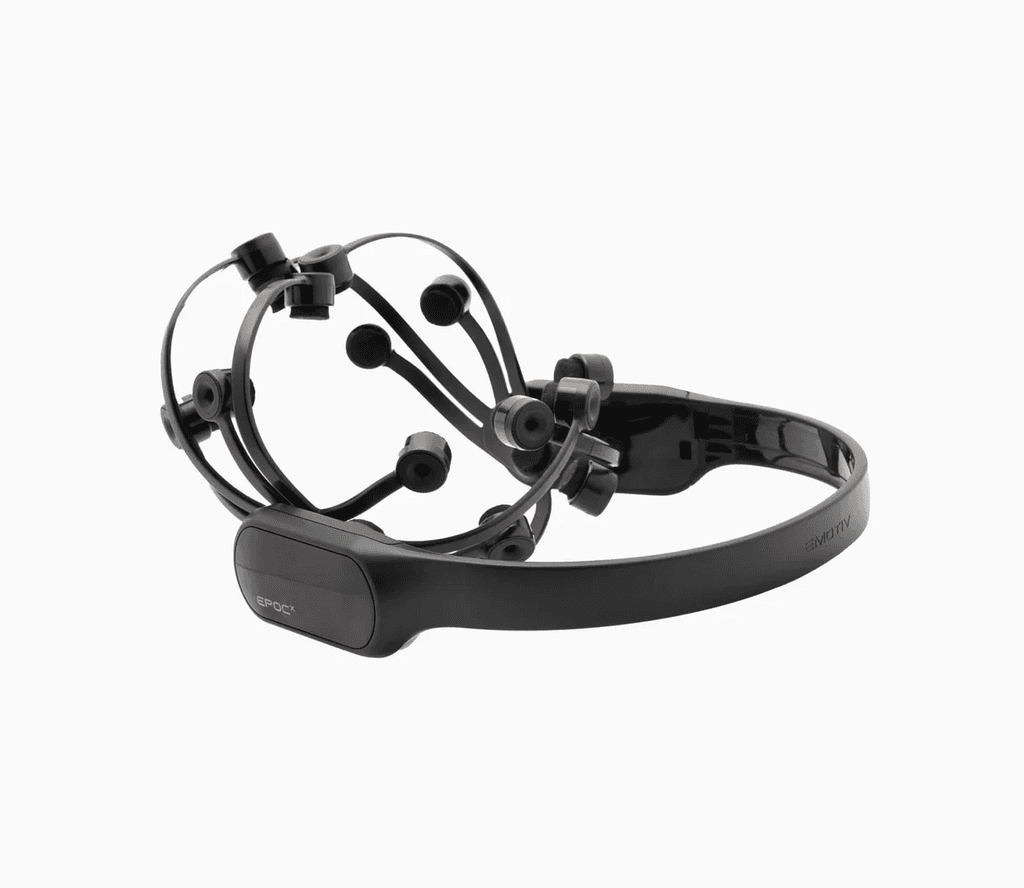 EEG headset
14 channels with saline sponges — self-donning by the participant and night recordings up to 9 hours
Features and photos →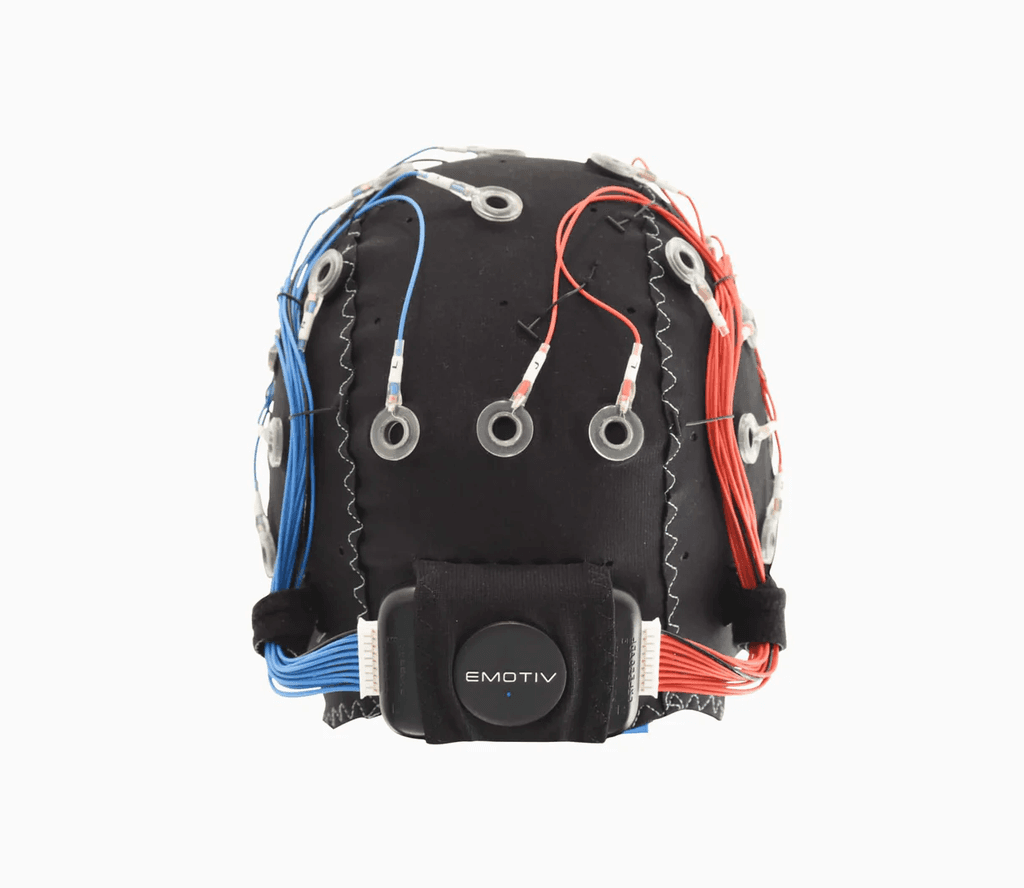 EEG headset
gel sensors, up to 32 channels, and time-locked EEG+EOG+ECG — laboratory-grade polygraph level
Features and photos →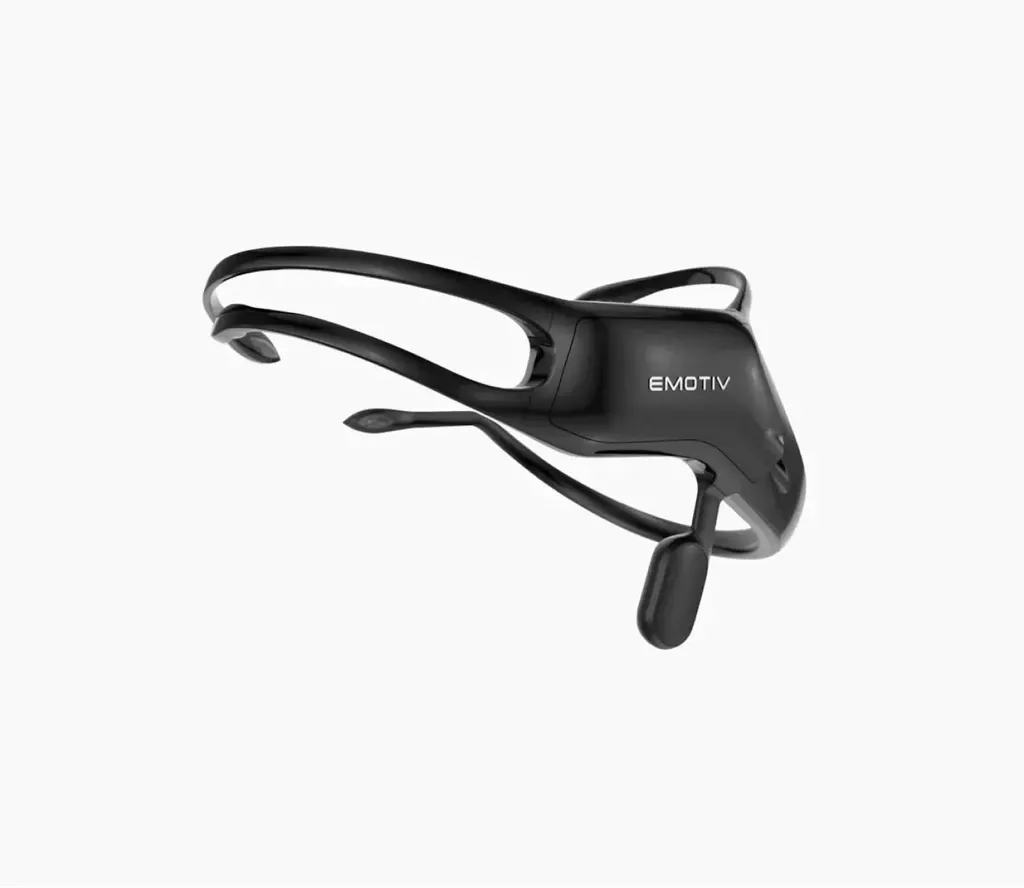 EEG headset
up to 20 hours battery for daytime drowsiness protocols and field research
Features and photos →Home recordings eliminate the 'first night effect' of inpatient settings and increase ecological validity.
Wireless registration: the participant is not tied to the device, fewer artifacts from cables.
Export to EDF/CSV — recordings open in familiar analyzers and sleep pipelines.
From 6 channels for screening to 32 for advanced protocols — the task grows, the configuration grows.
The headset kit allows for multiple participants to be recorded in parallel — the sample size grows faster.
We help with protocol development, processing, and interpretation — consultations in Russian.
Emotiv equipment is not a medical device and is intended for research, development, and wellness scenarios. Device names belong to their respective owners.
We'll send a quote with equipment, software, and timelines — within one business day. A phone consultation takes 10 minutes.