Budgets for traditional systems
Clinical EEG systems cost as much as a complete laboratory and require a full-time specialist for setup. Research headsets cover most applied tasks for a fraction of that cost — and without staff requalification.
Publishable data without million-dollar budgets: wireless EEG systems for psychophysiology, cognitive science, ergonomics, and BCI prototypes.
Each industry task has a specific solution: what the neurointerface provides and why it works here.
Clinical EEG systems cost as much as a complete laboratory and require a full-time specialist for setup. Research headsets cover most applied tasks for a fraction of that cost — and without staff requalification.
Gel, abrasive pastes, head washing after a session — up to half an hour per participant. Saline and dry sensors are applied in minutes, so you can conduct many more sessions per day.
Behavior in a shielded room doesn't translate well to real life. Wireless recording works in a classroom, museum, factory, and open spaces — the ecological validity of the experiment increases.
Recordings export to CSV/EDF, stream via LSL, and are accessible via API—data belongs to you. Process them in Python, MATLAB, or R with familiar libraries without 'black boxes'.
We've selected configurations that most often address industry tasks — with transition to full specifications and photos.
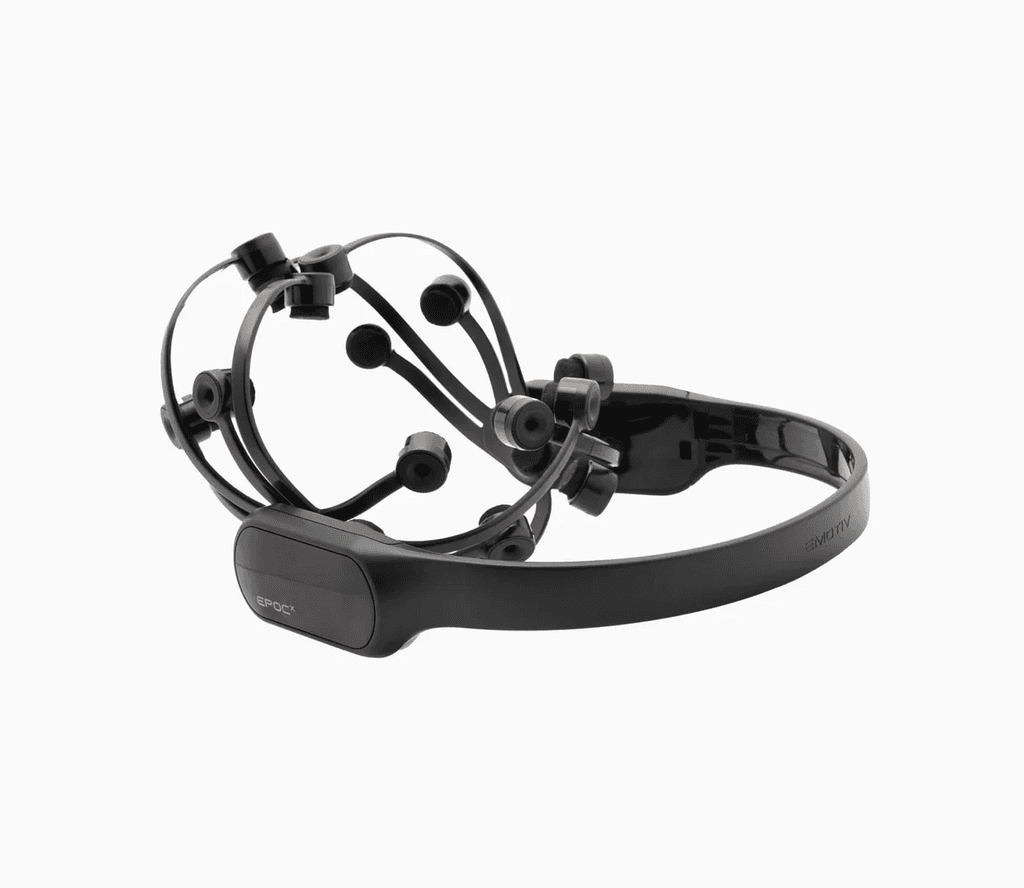 EEG headset
The workhorse of applied research: 14 channels on the 10–20 system, 128/256 Hz sampling, saline felt sensors, and the largest publication database.
Features and photos →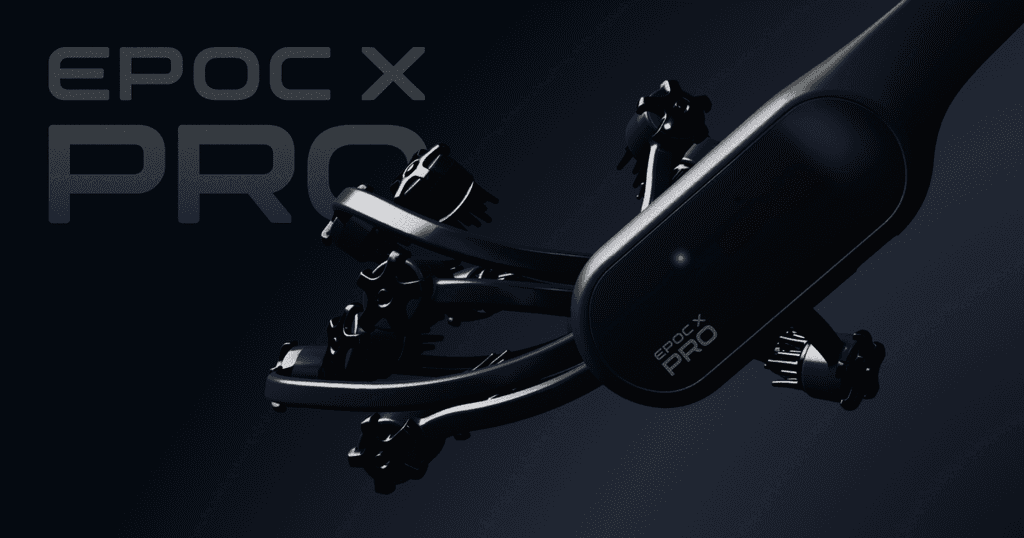 EEG headset
Premium signal quality: 16 channels, 24 bits, active amplifiers against artifacts, Wi-Fi 6 and built-in memory for 8+ hours of field recording.
Features and photos →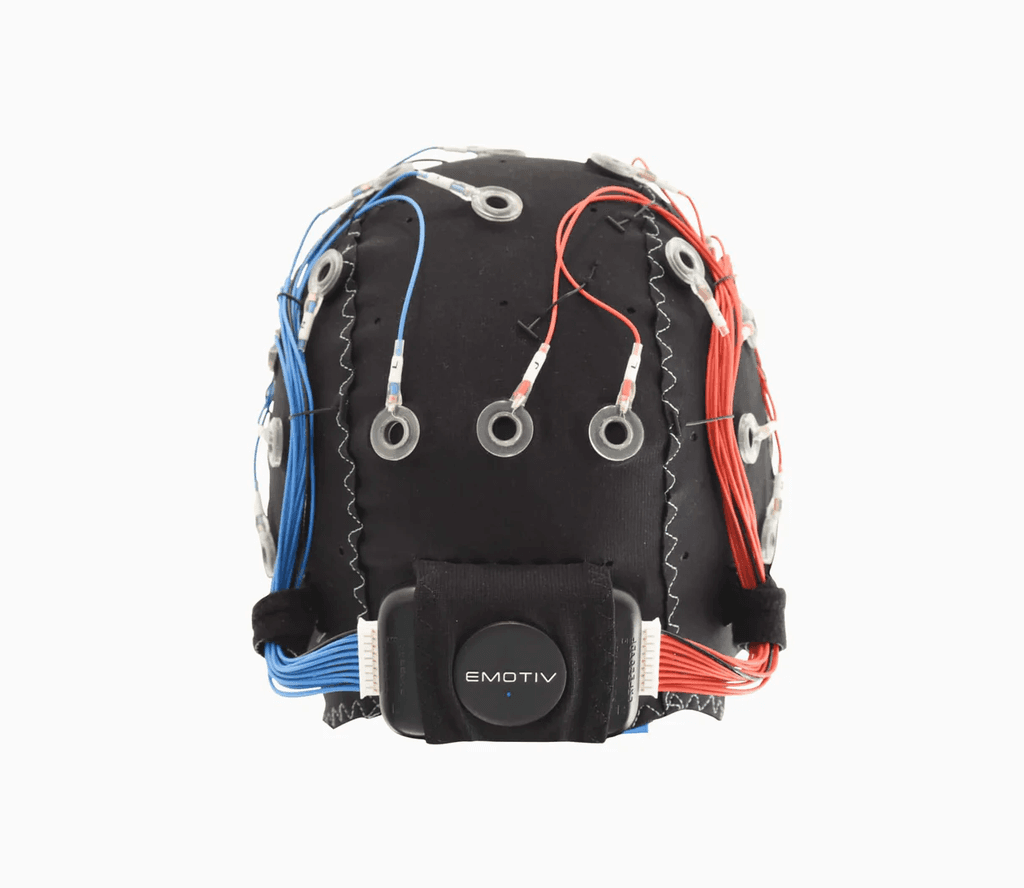 EEG headset
Maximum flexibility: up to 32 channels, gel or saline sensors, time-locked parallel recording of EEG, ECG, EMG, and EOG in multimodal protocols.
Features and photos →Attention, working memory, cognitive load, decision-making: EEG rhythm dynamics and ready-made state metrics for each paradigm stage.
P300, N400, error negativity and SSVEP: stimulus markers are written to the data stream, processing is done by familiar averaging pipelines.
Brain-computer interface prototypes: from motor imagery classification to P300 spellers, with SDK for Python and Unity.
Synchronized recordings of two or more participants in dyadic tasks: negotiations, joint training, team interaction.
EEG recording outside the laboratory — in transportation, production, sports venues, and urban environments thanks to battery autonomy.
Student laboratory works in neurophysiology and psychophysiology: theory is reinforced with one's own brain rhythms.
Six measurable benefits: from startup speed to data quality and Russian-language support.
14–32 channels, sampling up to 512 Hz and resolution up to 24 bits meet the requirements of most application protocols — without the price of a stationary EEG.
Export to CSV and EDF, streaming via LSL, REST/WebSocket API — no 'black box'. The methodologist has access to the full signal, not just ready-made reports.
Stimulus markers, LSL compatibility, and pairing with eye-tracking, ECG, and other modalities — multimodal protocols are assembled without custom electronics.
Bluetooth and Wi-Fi range, up to 9 hours of autonomy (EPOC X), and 8+ hours of memory (EPOC X PRO) — experiments move out of the Faraday cage into the field.
Quick insights — with standardized Emotiv metrics, deep analysis — with the raw signal. Both levels are available in a single recording.
We'll configure the setup for your protocol, help with recording and export settings, and train your staff — support and documentation in Russian.
Describe your task: in 10 minutes, we'll select the model, software, and configuration for your industry's scenario.
Quote request — within a business day. Delivery throughout Russia, 12-month warranty.
We set up software and integrations, train your team in Russian: first recordings already on the day of delivery.
We support protocols and data, help scale implementation from pilot to production.
Emotiv equipment is not a medical device and is intended for research, development, and wellness scenarios. Device names belong to their respective owners.
We will send a quote with configuration, prices, and timelines — within one business day. Or call: a consultation takes 10 minutes.