Expensive laboratory equipment
Professional encephalographs are unavailable to most schools and even universities. Educational headsets provide real EEG at the price of a laptop—equipment can be placed in several classrooms.
Live neurosciences in the classroom: a student puts on the headset — and sees their own alpha rhythms, attention levels, and neurocontrol in action.
Each industry task has a specific solution: what the neurointerface provides and why it works here.
Professional encephalographs are unavailable to most schools and even universities. Educational headsets provide real EEG at the price of a laptop—equipment can be placed in several classrooms.
Gel systems require a lab assistant and dozens of minutes per student. Semi-dry and saline sensors are applied in a minute — a group of 20 works without breaks.
Textbook diagrams don't capture live dynamics. Visualizing your own rhythms and attention metrics in real time makes the material memorable.
SDK, API, and code examples allow students not only to observe signals but also to create products: neurogames, assistive apps, research papers.
We've selected configurations that most often address industry tasks — with transition to full specifications and photos.
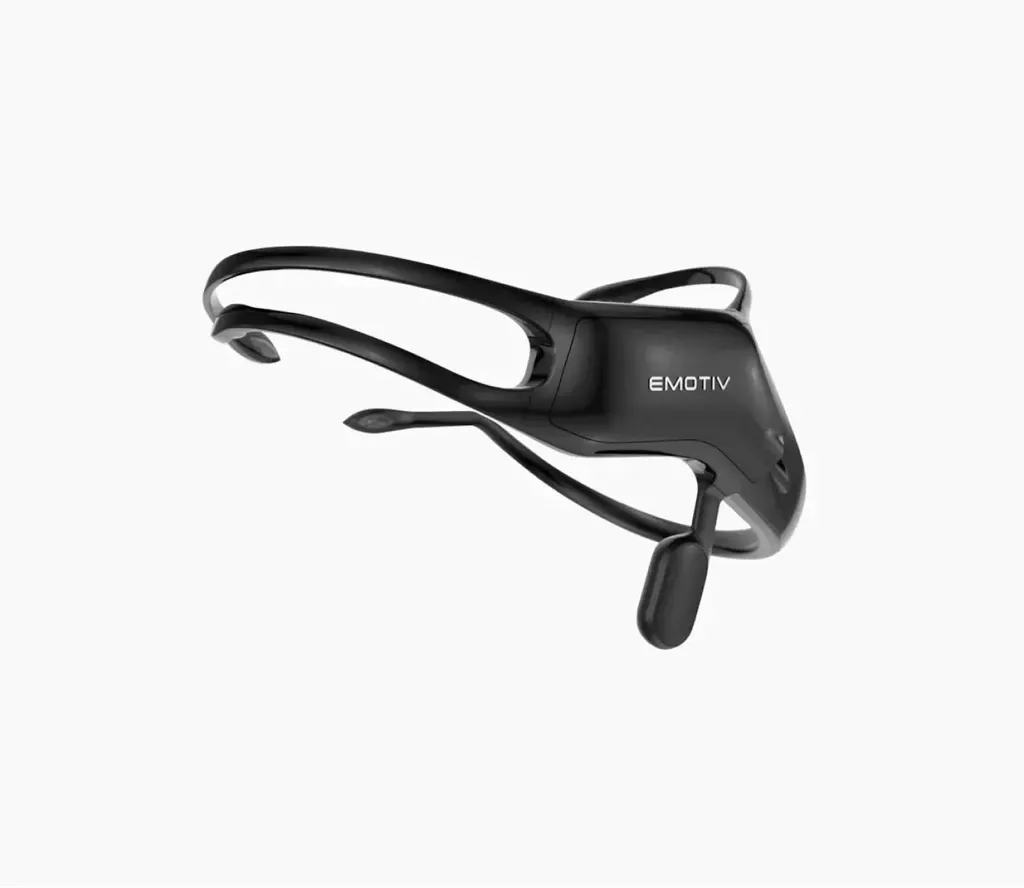 EEG headset
Optimal for classroom use: 5 channels, semi-dry sensors without preparation, up to 20 hours of battery life and light weight — suitable even for school clubs.
Features and photos →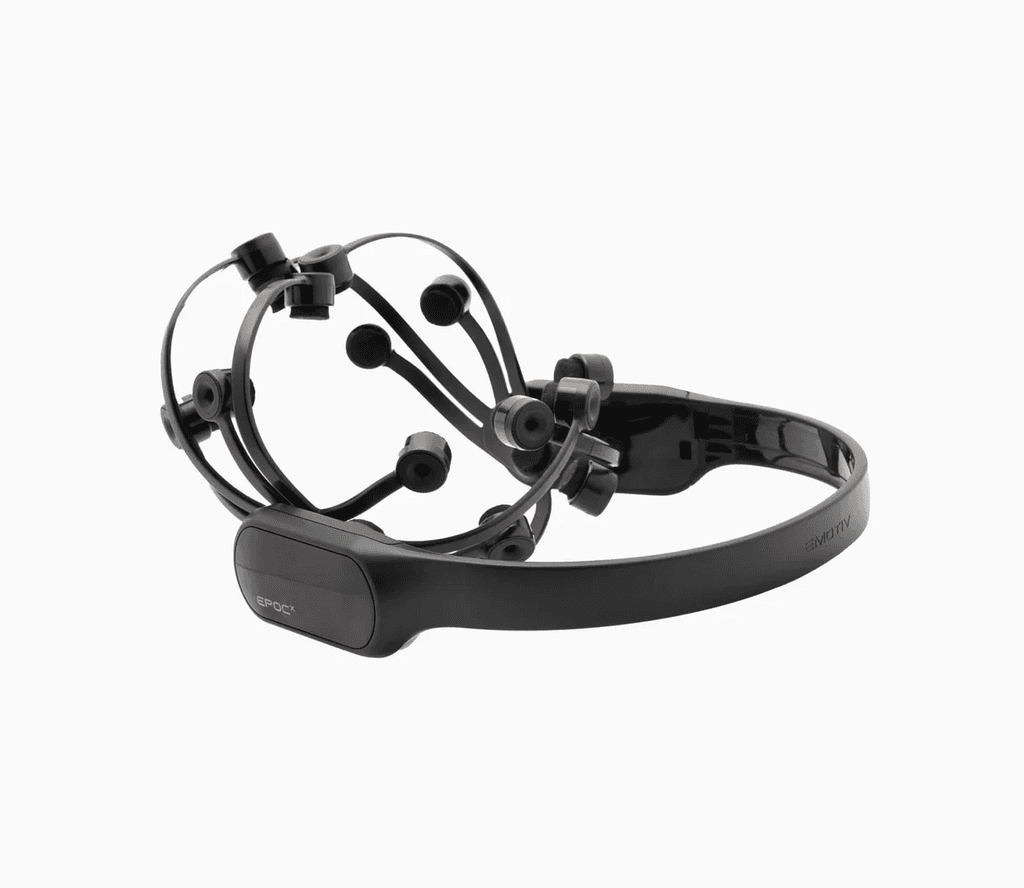 EEG headset
For university laboratories and theses: 14 channels in 10–20 system, full access to raw EEG, thousands of publications as research foundation.
Features and photos →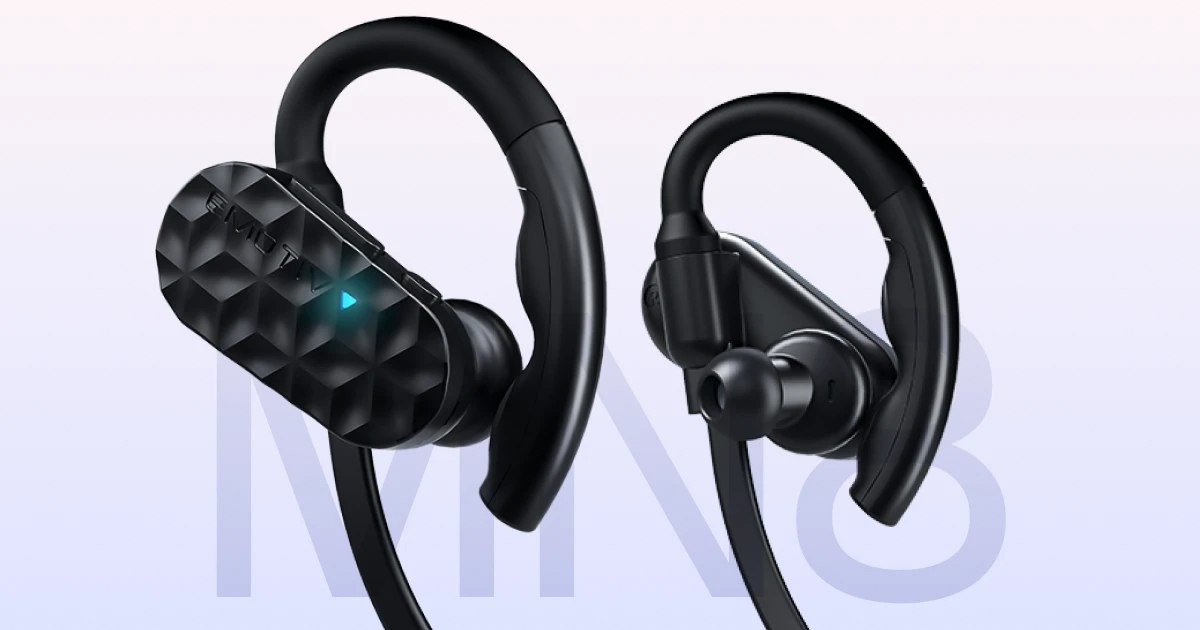 EEG headset
Format of regular wireless earbuds: impressive demonstrations at science days and projects in mobile applications.
Features and photos →Practical workshops on EEG rhythms, attention, and fatigue: students themselves conduct recording, processing, and interpretation — from hypothesis to conclusions.
'Brain and technology' classes: neurogames, attention experiments, first steps in neurointerface programming.
Team neurocontrol projects on Emotiv SDK: from P300 spellers to neuroadaptive games — with entries into competitions and publications.
Collecting your own EEG data for theses and coursework: an affordable tool makes the empirical part realistic in terms of time and budget.
Striking demonstrations of 'mind control' at open days, olympiads, and career fairs — recruiting students to neurosciences.
Training programs for educators and STEM center staff: from neurophysiology basics to practical workshop methodology.
Six measurable benefits: from startup speed to data quality and Russian-language support.
Up to 20 hours of battery life for Insight 2: headsets last a full school day and don't turn lessons into socket logistics.
Semi-dry and saline sensors without gel: between demonstrations for the next students — seconds, not cigarette breaks for washing hair.
Multiple headsets + shared guidelines and software: groups work in parallel, not lining up for a single device.
Emotiv App shows rhythms and metrics visually — the interface is accessible to a schoolchild, and gives the teacher a demonstration mode for the projector.
SDK and API (Python, C++, Unity, OSC): from reading the signal, students develop their own neurocontrolled applications in a semester.
We'll help integrate EEG into your program: we'll suggest lesson, lab, and project scenarios, and train teachers.
Describe your task: in 10 minutes, we'll select the model, software, and configuration for your industry's scenario.
Quote request — within a business day. Delivery throughout Russia, 12-month warranty.
We set up software and integrations, train your team in Russian: first recordings already on the day of delivery.
We support protocols and data, help scale implementation from pilot to production.
Emotiv equipment is not a medical device and is intended for research, development, and wellness scenarios. Device names belong to their respective owners.
We will send a quote with configuration, prices, and timelines — within one business day. Or call: a consultation takes 10 minutes.