users
Natural interaction
Participants talk and move, instead of lying in isolation — the ecological validity of the experiment increases.
Use case for human interaction research: interpersonal synchronization of brain activity in dialogue, training, and teamwork.
Hyperscanning is a method for simultaneously recording the brain activity of multiple participants during natural interaction. Unlike a classical experiment with 'one subject in an isolated booth', hyperscanning shows how brains synchronize during dialogue, collaborative problem-solving, learning, and play.
The key technical challenge is a unified timeline. Recordings from multiple headsets are synchronized to common event markers (stimulus onset, dialogue response, game move), after which inter-subject metrics are calculated: correlation of rhythmic activity, alpha and theta phase synchronization, consistency of engagement changes. Wireless headsets also solve the second problem of the method—participants can look at each other, talk, and move, rather than lying in separate MRI scanners.
We build configurations based on group size and task: from a pair of Insight for an educational demonstration to multiple EPOC X or FLEX units with LSL labeling for full-scale research. We assist with synchronization, test recordings, and recommendations for processing inter-subject data—all in Russian.
Key signal indicators on which the methodology is built: from basic EEG rhythms to derived indices.
rhythmic power coherence between participants during interaction moments
phase-locking of alpha/theta rhythms between individuals as an index of 'tuning' to each other
synchronous bursts of attention and engagement metrics in dialogue
who initiates activity changes more frequently — useful in team research
utterances, moves, stimuli — all tied to a single timeline
impedance and artifact control per headset separately
We define the interaction task (dialog, negotiations, collaborative game) and the number of participants, and select metrics.
We select headset sets and a synchronization station, prepare an LSL scenario with common event markers.
We conduct a test session: check impedances, delays, and radio channel quality with multiple devices operating simultaneously.
We collect data from dyads or groups; video/audio is recorded in parallel for later annotation.
We export recordings to Python/MATLAB/EEGLAB, calculate inter-subject metrics, and interpret the results.
Configurations that most often solve the use case — with a transition to full specifications and photos.
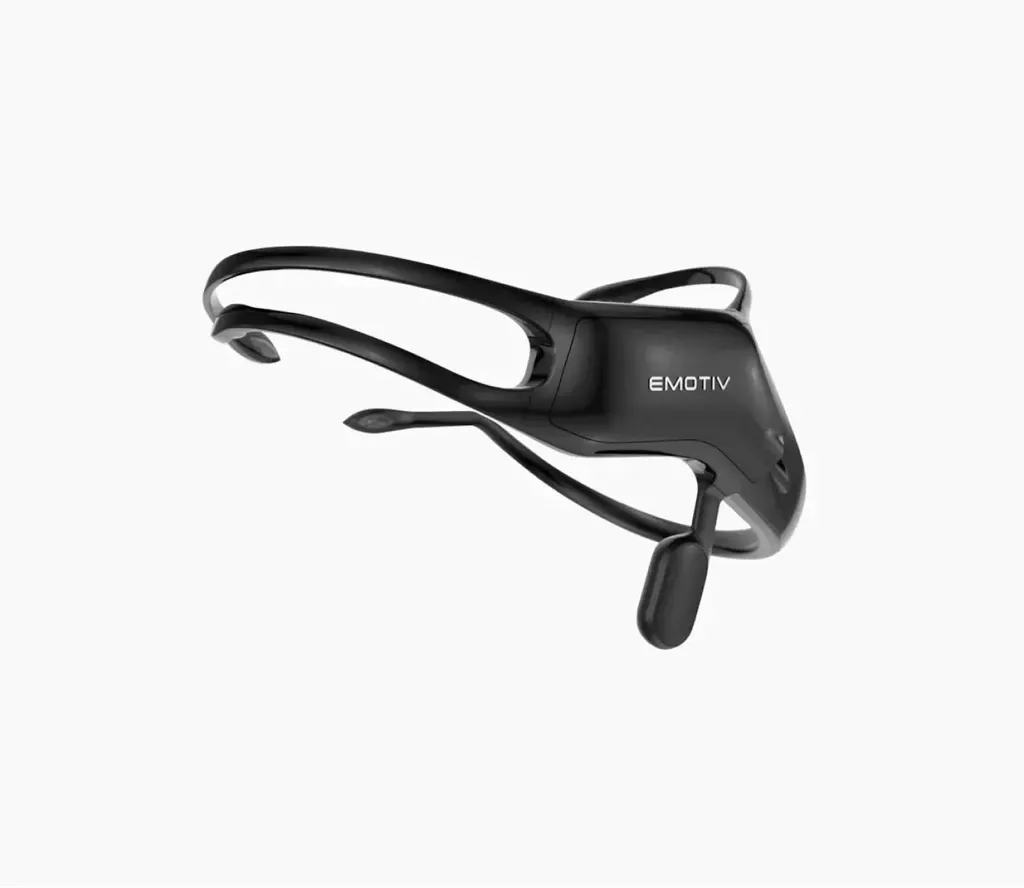 EEG headset
light semi-dry headset: quick participant setup and minimal discomfort in social experiments
Features and photos →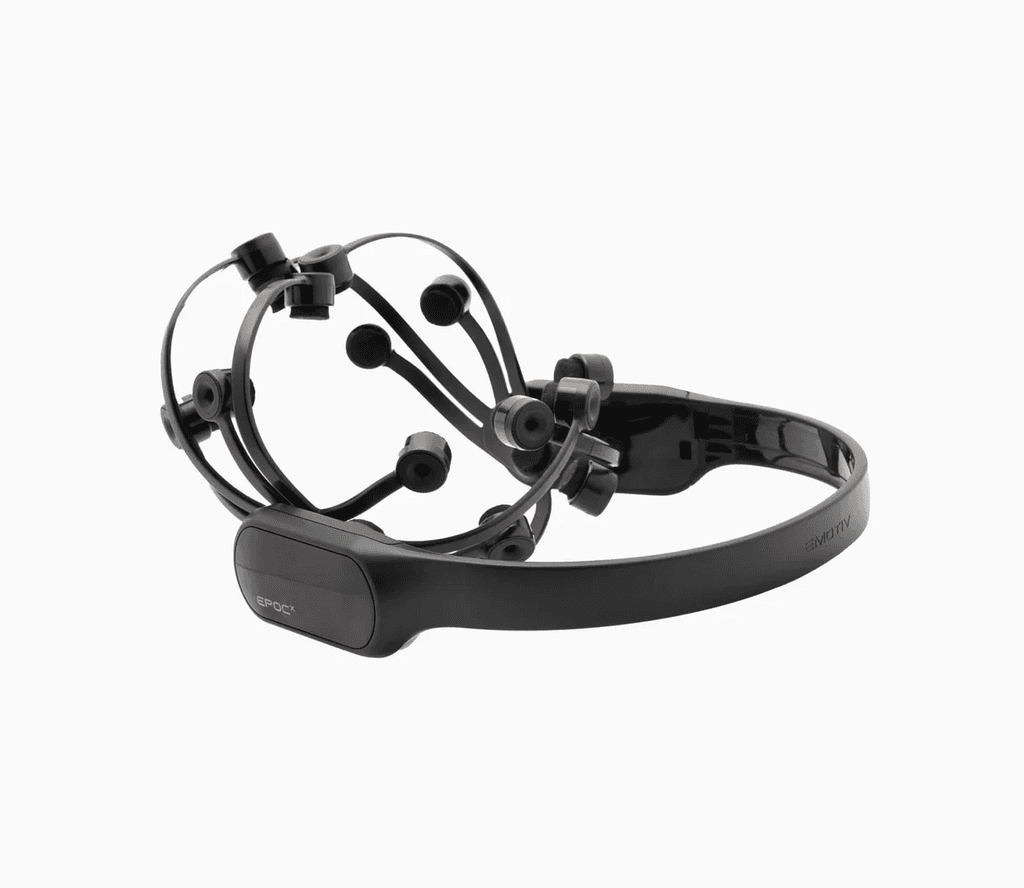 EEG headset
14 channels according to 10–20 and stable Bluetooth — a workhorse for dyadic and group recordings
Features and photos →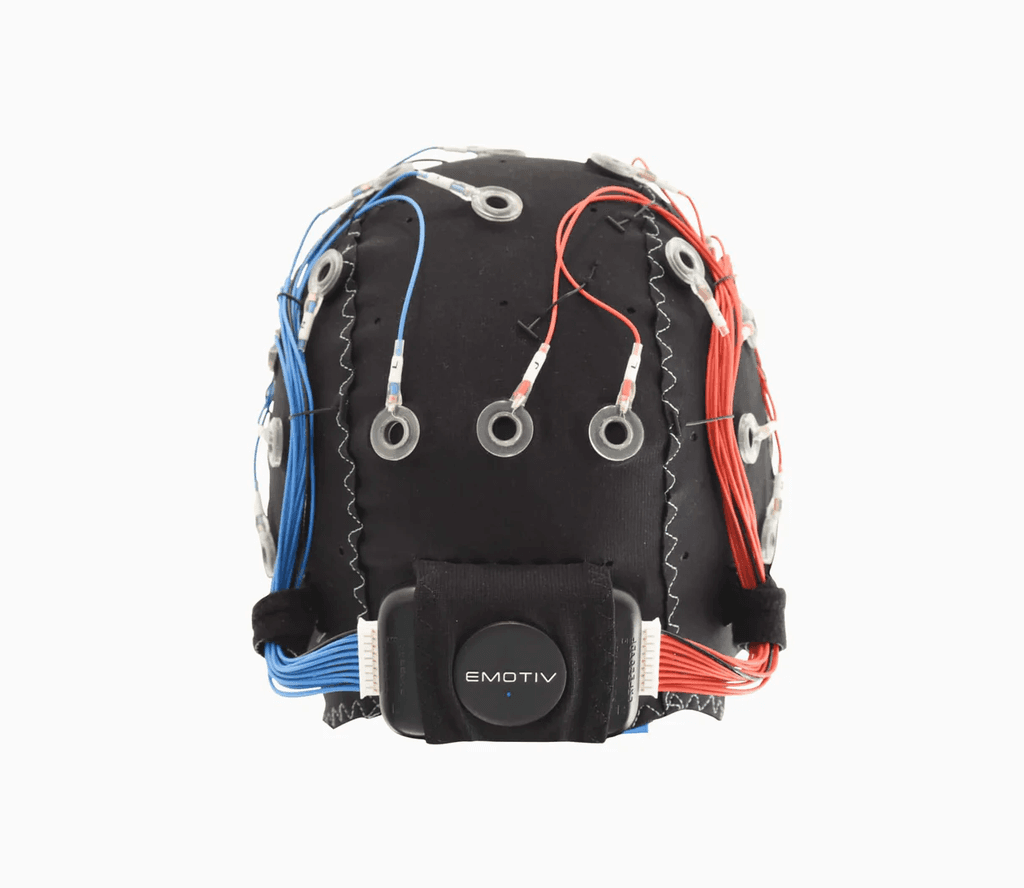 EEG headset
gel sensors and up to 32 channels when a laboratory-level signal quality is needed for each participant
Features and photos →Participants talk and move, instead of lying in isolation — the ecological validity of the experiment increases.
LSL labeling combines recordings from all headsets: inter-subject metrics are calculated correctly.
Wireless devices enable hyperscanning in classrooms, offices, and on-site, not only in the lab.
Configurations for two participants to small groups — grow your methodology without changing equipment.
Recording quality and precise synchronization are sufficient for articles and dissertation data.
We share synchronization and multi-headset recording processing practices — consultations in Russian.
Emotiv equipment is not a medical device and is intended for research, development, and wellness scenarios. Device names belong to their respective owners.
We'll send a quote with equipment, software, and timelines — within one business day. A phone consultation takes 10 minutes.