zap
Rapid prototyping
Dry and semi-dry sensors remove the 'laboratory' barrier — a demo is assembled on ready-made hardware without buckets of gel.
Use case for R&D teams and startups: rapid prototype start with dry sensors and scaling to lab-quality data.
BCI (brain–computer interface) is a system that converts brain signals into commands for external devices. Modern wireless EEG headsets cover the entire neurointerface development cycle: signal acquisition, transmission to a computer, preprocessing, and pattern recognition—without bulky amplifiers and gel-based preparation.
A typical pipeline looks like this: the headset streams raw EEG via Bluetooth or a USB receiver, the application receives data and metrics via SDK (attention, engagement, stress, facial and mental commands), and then your logic converts them into actions—controlling an interface, robot, game, or smart home scene. For strict experiments, data is synchronized with event markers: the EPOC X PRO has a labeling delay of less than a millisecond.
We help you build this pipeline: advise on which headset will cover your prototype's requirements, what sampling rates and channels are needed for your classifier, how to stream data to Python or MATLAB, and where the line is drawn between a 'hackathon demo' and a sustainable product. We supply equipment with documentation and examples in Russian.
Key signal indicators on which the methodology is built: from basic EEG rhythms to derived indices.
data stream from each channel — foundation for custom features and classifiers
recognition of imagined movements (neurogames, action control)
ocular and facial gestures as quick interface 'buttons'
attention, engagement, stress, and relaxation — ready-made metrics on top of EEG
6- and 9-axis accelerometer/gyroscope for head movement context
precise stimulus-to-signal time-locking for controlled experiments
We gather requirements: BCI type, required channels and frequencies, development environment, target application platform.
We start with dry or semi-dry headsets — MN8 and EPOC X allow you to build a working demo in a matter of weeks.
We configure streaming via SDK/API and LSL, connect Python/MATLAB, and check signal quality and latency.
We fine-tune the classifier on your features or ready-made metrics, test it with users, and increase accuracy.
Switching to FLEX or EPOC X PRO — more channels, gel sensors, and precise synchronization for serial research.
Configurations that most often solve the use case — with a transition to full specifications and photos.
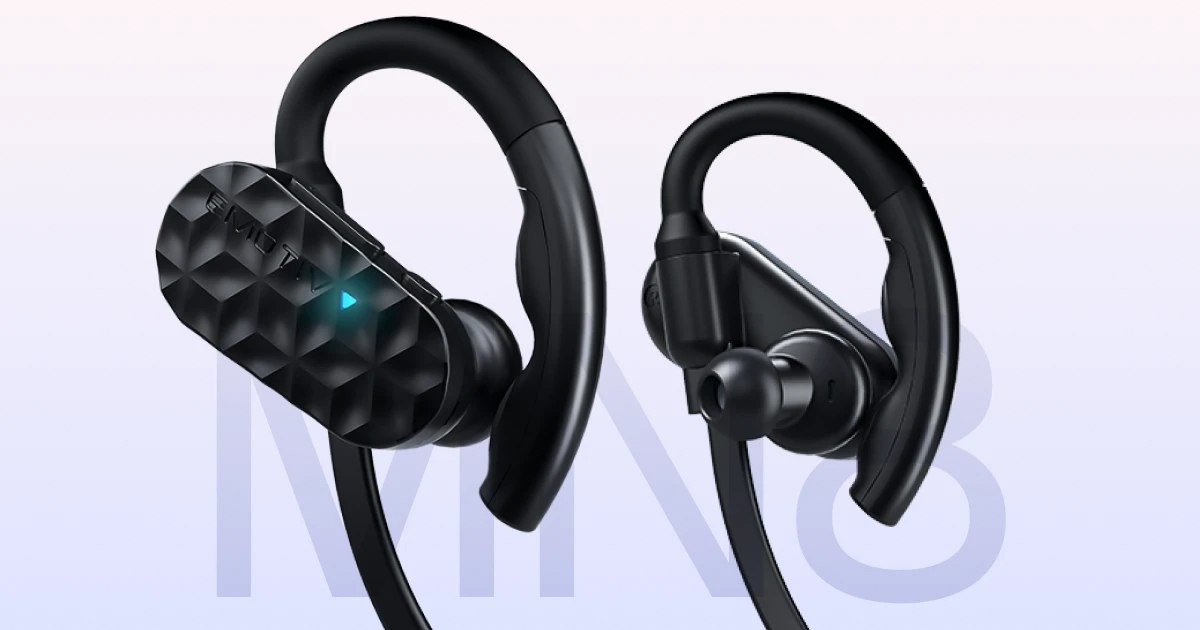 EEG headset
8-channel in-ear headset with IMU and audio — quick prototype startup and mobile scenarios
Features and photos →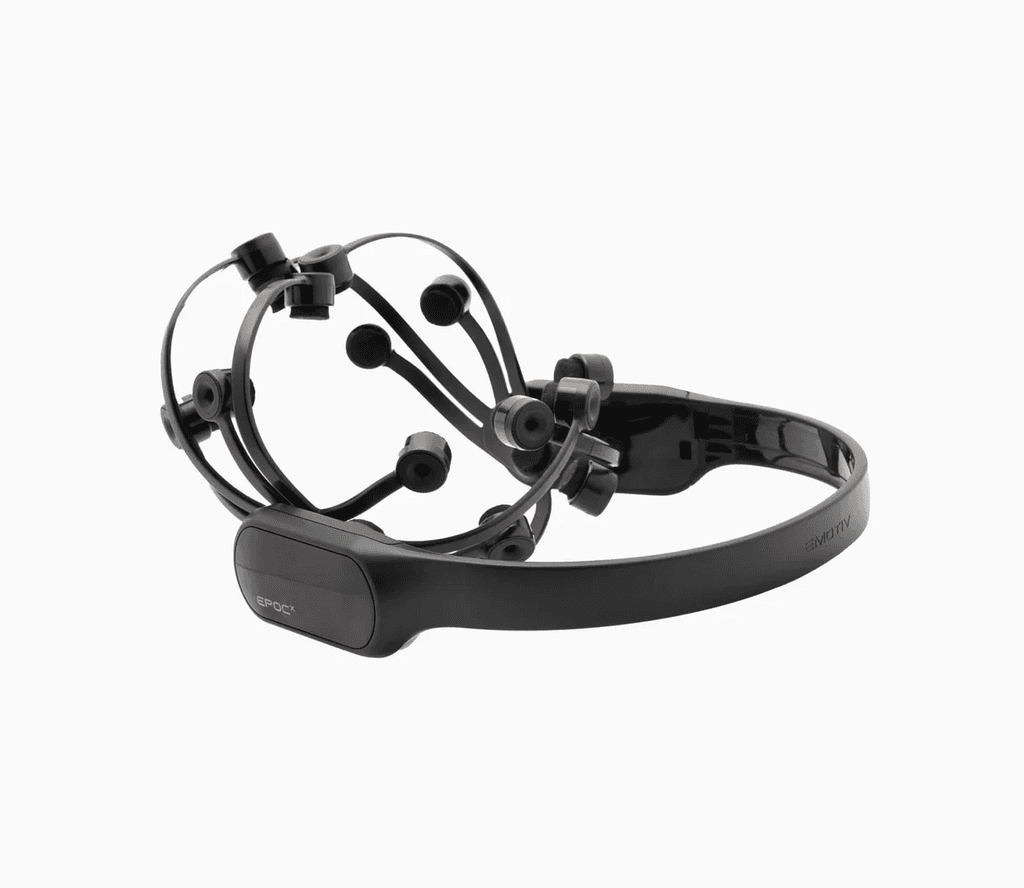 EEG headset
14 channels according to the 10–20 system, 2048 Hz digitization and SDK — a classic platform for BCI prototypes
Features and photos →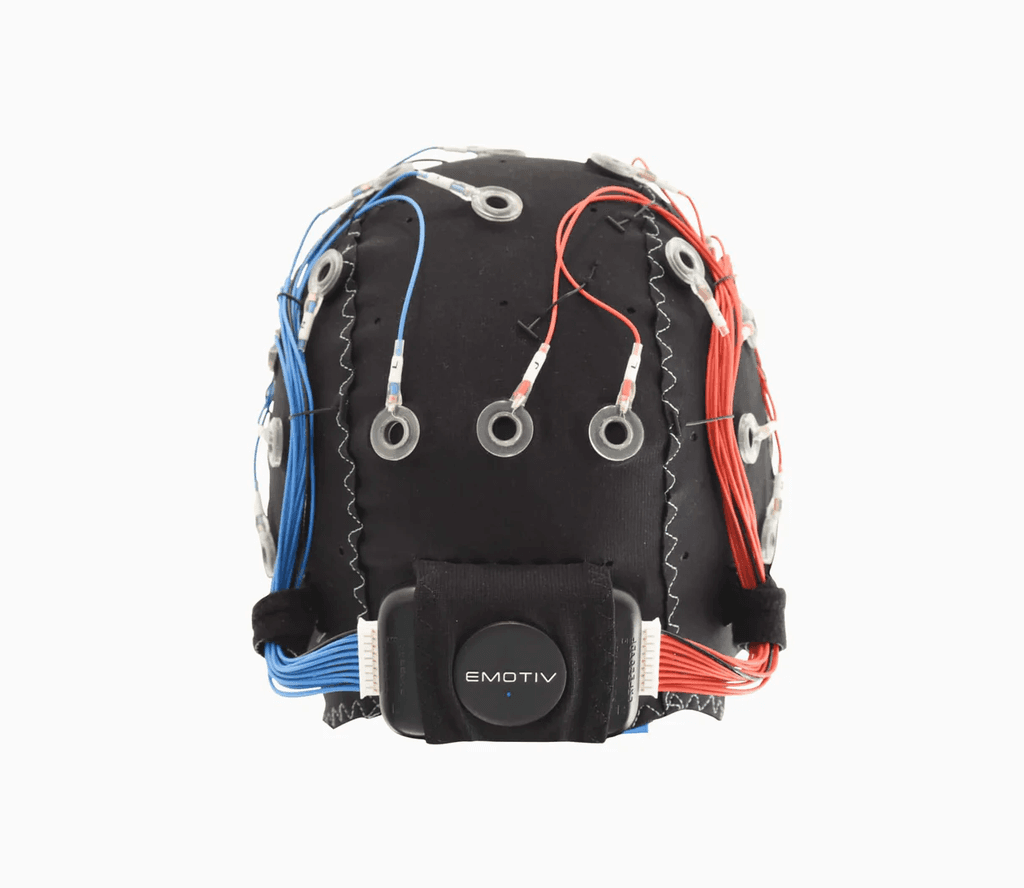 EEG headset
up to 32 channels with gel sensors and time-locked EEG+ECG+EMG+EOG — for complex multi signal interfaces
Features and photos →Dry and semi-dry sensors remove the 'laboratory' barrier — a demo is assembled on ready-made hardware without buckets of gel.
SDK and API provide raw EEG and ready-made metrics: you can write your own classifier or build on top of existing ones.
LSL, Python, MATLAB, Unity — headsets integrate into your familiar stack of research and gaming tools.
The 2 to 32 channel line allows you to grow from a hackathon demo to serial testing without changing the vendor.
Millisecond event marking in EPOC X PRO makes experiments reproducible and publication-ready.
We implement BCI projects ourselves and will point out the pitfalls — from artifacts to choosing the communication protocol.
Emotiv equipment is not a medical device and is intended for research, development, and wellness scenarios. Device names belong to their respective owners.
We'll send a quote with equipment, software, and timelines — within one business day. A phone consultation takes 10 minutes.